


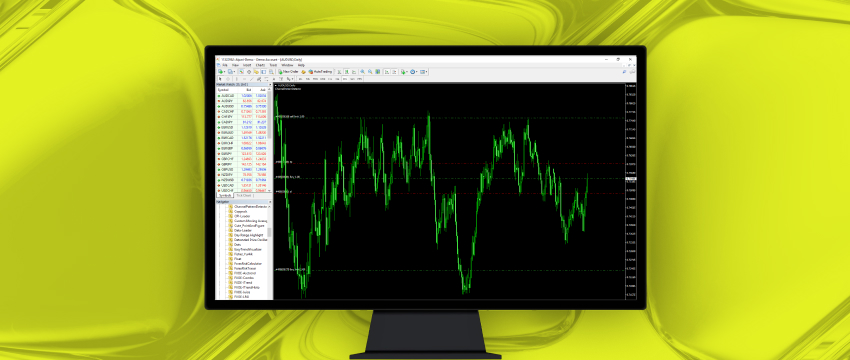
Not all forex trading signals are created equal. Some may provide useful market analysis, while others may provide poor-quality information or recommendations that do not match a trader’s strategy. Knowing how to evaluate providers is one of the most practical skills traders can develop.
What Are Forex Trading Signals?
Forex trading signals are trade recommendations generated by either a human analyst or an automated system. They typically tell you which currency pair to trade, the direction to take, and where to set your entry, stop loss, and take profit levels.
Think of them as a tool that can support informed decision-making when combined with a trader’s own analysis and risk management.
The forex market moves quickly. Geopolitical events, economic data releases, and central bank decisions can create volatility across major currency pairs.
How Do Forex Trading Signals Work?
Forex trading signals work by analysing market information and identifying potential trading opportunities. Signal providers may use technical indicators, fundamental analysis, price patterns, market sentiment, or automated systems to generate trade ideas.
A typical forex trading signal may include:
- The currency pair being analysed, such as EUR/USD or GBP/USD
- Whether the signal identifies a potential long or short trade idea
- A possible entry level
- A suggested stop loss level
- A potential take profit target
For example, a signal may highlight a possible EUR/USD setup based on technical analysis or market conditions. The trader must still decide whether the opportunity fits their own strategy, risk tolerance, and overall trading plan.
Signals can be created by professional analysts, automated systems, or a combination of both. Their usefulness depends on factors such as the quality of the analysis, transparency of the provider, and how the trader applies proper risk management.
Why Choosing Forex Trading Signals Carefully Matters
A signal provider that offers inaccurate, inconsistent or poorly explained trade ideas make it harder to understand why certain trades succeed or fail.
Trading signals can provide a framework for analysing potential setups. When combined with proper risk management and independent decision-making, they may help traders approach the market in a more structured way.
Top Tips for Evaluating Forex Trading Signals

1. Check the Track Record First
A signal provider should ideally offer a verifiable performance history or provide clear information about its methodology. Look for:
- A documented trading history covering several months
- Win rate alongside average risk-to-reward ratio
- Records that include both winning and losing trades, rather than only selected highlights
A high win rate with poor risk management can still result in losses. Likewise, a lower win rate combined with a favourable risk-to-reward ratio may still be viable. However, real-world results also depend on factors such as spreads, commissions, execution quality, and consistency.
2. Understand Where the Signal Comes From
There are two main sources of forex trading signals: human analysts and algorithmic systems. Neither is automatically better.
Human analysts bring contextual judgment. They can factor in news events, sentiment shifts, and geopolitical developments that algorithms sometimes miss.
For example, changes in central bank policy or major economic events may influence currency markets in ways that require broader context beyond technical indicators alone.
Algorithmic signals can process large amounts of market data quickly and may reduce some emotional biases within the signal-generation process. However, their effectiveness depends on the quality of the underlying model, data, and strategy.
3. Make Sure the Signal Fits Your Trading Style
This one trips up a lot of traders. A signal built for scalpers won’t suit a swing trader. A signal designed for high-volatility sessions won’t perform the same during quiet market hours.
Before you follow any signal provider, ask yourself honestly: does their approach match how I actually trade? If you can only monitor the market for an hour each morning, end-of-day signals are a far better fit than intraday alerts.
4. Look for Clear, Actionable Information
Reliable trading signals should not be vague. They should include a specific currency pair, a clear entry price, a defined stop loss, and a target level. If a signal only says “buy EUR/USD soon” without explaining entry levels, risk parameters, or supporting analysis, it provides limited information for decision-making.
Precision matters. Acting on unclear guidance may increase the risk of making decisions without a complete understanding of the trade setup.
5. Test Before You Commit Real Money
Paper trading or demo accounts exist for exactly this reason.
Many trading platforms offer demo environments where traders can test forex trading signals without risking live capital.
Consider testing a new signal provider over an appropriate period using a demo account before committing live capital. Track every trade. Calculate your results as if real money were involved. Only then should you consider applying the signals to a live account.
6. Avoid Providers Who Promise Guaranteed Profits
This should be considered a major warning sign. No forex trading signals provider can guarantee returns. The market is too complex, too reactive, and too influenced by unpredictable events for any system to win every time.
Providers making guaranteed profit claims should be treated with caution, as financial markets involve uncertainty and losses are always possible.
7. Consider the Delivery Method and Speed
Timing can be important in forex trading. A signal that arrives after the intended entry window may no longer reflect the original trade setup. Check how the provider delivers their alerts: via app notification, email, Telegram, or directly through a trading platform.
Some platforms integrate signal tools directly into the trading environment, allowing traders to review information without switching between multiple applications.
Speed and convenience can affect how effectively traders evaluate and respond to market information.
8. Assess the Level of Education Behind the Signal
More transparent signal providers do not just tell traders what to trade. They explain the reasoning behind each call. Over time, that transparency may help traders develop their own analytical skills and avoid relying solely on external alerts.
Consider whether the provider helps you understand the reasoning behind each trade idea or simply encourages users to copy signals without understanding the process.
Common Red Flags to Watch Out For
Before committing to any forex trading signals service, keep an eye out for these warning signs:
- No verifiable track record or only short-term results
- Pressure to subscribe immediately or take urgent action
- Signals delivered with no explanation or context
- Providers who dismiss losses as “market anomalies”
If a provider lacks transparency or makes unrealistic claims, it may be worth comparing alternatives before committing money or relying on their signals.
Building a Reliable Process Around Forex Trading Signals
The goal is not to rely on a signal provider as a replacement for your own analysis or risk management.
The goal is to use trading signals as one input in a broader decision-making process. Cross-reference signals with your own chart reading. Factor in current macro conditions. Set your risk parameters before you enter, not after.
Traders who use signals as an educational and analytical tool may develop a stronger understanding of market behaviour over time. However, even reliable providers can experience periods where their signals do not perform as expected.

Frequently Asked Questions
Are forex trading signals profitable?
Forex trading signals may support trading decisions when combined with proper analysis and risk management. However, profitability is never guaranteed, and losses are possible.
What are the best forex trading signals?
Reliable forex trading signals are generally those supported by transparent performance information, clear trade parameters, and appropriate risk management guidance.
Are free forex trading signals reliable?
Some free signals may provide useful information, but traders should evaluate whether the provider offers transparent results and sufficient analysis.
Can beginners use forex trading signals?
Principiantes may use signals as a learning resource, but they should understand the reasoning behind trade ideas and develop their own risk management skills rather than relying solely on alerts.
AVISO LEGAL: Esta información no se considera un asesoramiento de inversión ni una recomendación de inversión, sino que es una comunicación de marketing.