





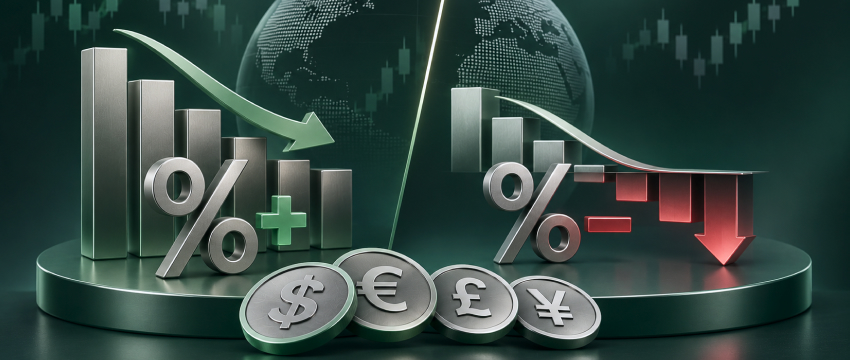
Disinflation means inflation is slowing, not that prices are falling. This matters to currency and gold traders because inflation affects interest rate expectations. However, lower inflation does not guarantee a weaker currency or higher gold prices.
What is Disinflation and Why Does it Matter?
Inflation measures the rate at which the general price level rises. When that rate drops from 5% to 3%, average prices are still increasing, just more slowly. The Federal Reserve Bank of Cleveland explains this distinction in its guide to slowing inflation.
For households, slower price increases can ease budget pressures without reversing earlier rises. Traders also assess whether central banks will lower borrowing costs. That depends on growth, employment and inflation trends.
Disinflation vs Deflation: How Are They Different?
The key difference is the direction of the overall price level. Slower inflation means prices rise at a reduced pace, whereas deflation means they decline across the economy. Neither describes the price of one product in isolation.
| Feature | Slowing inflation | Deflation |
| Inflation rate | Falls but remains positive | Turns negative |
| General price level | Continues rising | Falls |
| Illustrative example | Annual inflation slows from 5% to 3% | Annual inflation reaches minus 1% |
| Possible market concern | Changing interest rate expectations | Weak demand and economic stress |
These illustrative examples show why the two trends can produce different economic and market pressures.
Why Can Slower Inflation Still Feel Expensive?
A lower inflation rate does not restore prices to their previous levels. Imagine a basket of goods costs $100 and rises to $105 after a year of 5% inflation. If inflation then falls to 3%, the basket costs $108.15 the following year.
If wages lag behind prices, affordability remains difficult. Improving inflation figures may therefore feel disconnected from shopping bills.
When Can Falling Prices Become a Problem?
Sustained deflation can reduce spending when people expect better prices later. Weaker demand may then squeeze company revenues, hiring and wages, creating further downward pressure on prices. The Cleveland Fed describes how this cycle can deepen economic weakness.
Cheaper energy and improved production can benefit consumers. The concern is a broad price decline alongside weak demand and reduced investment.
How Does Slower Inflation Affect Exchange Rates?
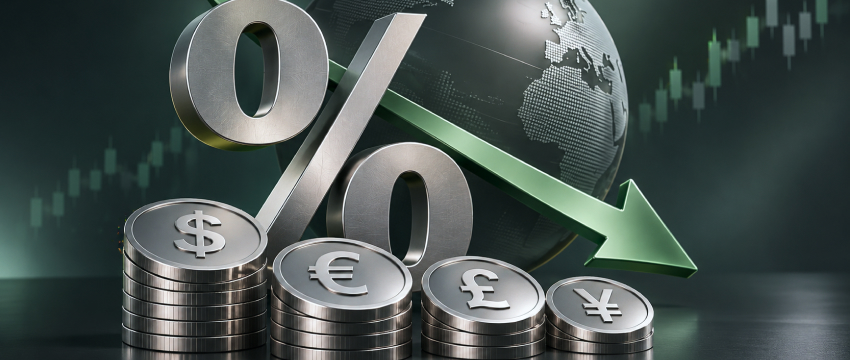
Disinflation can influence exchange rates by changing expectations for central bank interest rates. If price pressures ease sustainably, policymakers may have more scope to cut rates. Lower expected returns can reduce demand for a currency, particularly if other countries maintain higher rates.
Yet markets react to surprises. A widely expected inflation reading may barely move exchange rates. Growth and central bank guidance also matter.
Interest Rate Expectations and Currency Demand
Interest rates influence how attractive a currency appears to international investors. Higher relative rates may encourage demand for deposits and bonds denominated in that currency. The Bank of England explains how this mechanism can affect sterling.
If two central banks both cut rates, the currency response may depend on which cuts faster. Political uncertainty and growth expectations also affect capital flows.
Why Might Currencies React in Different Ways?
Currencies can respond differently because slower inflation has different causes. Easing supply constraints alongside steady employment may reassure investors. Falling inflation driven by collapsing demand can instead increase worries about recession.
Markets may already anticipate rate cuts. An inflation reading above forecasts could therefore lift a currency, despite a broader slowing trend.
What Happens to Gold as Inflation Slows?
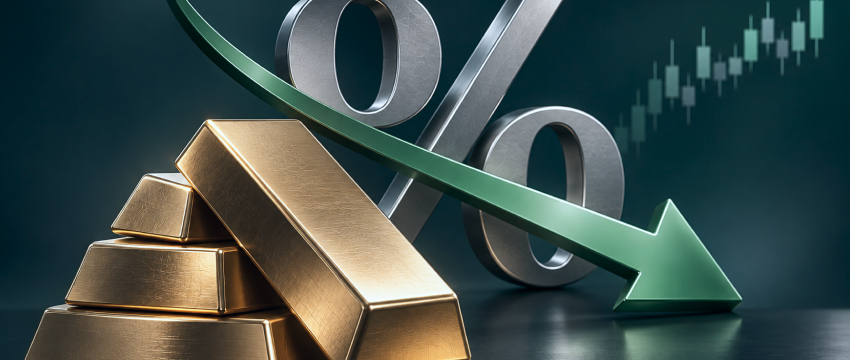
Gold does not automatically rise or fall when inflation declines. Its price reflects several forces, including bond yields, the US dollar, investment demand and uncertainty. The World Gold Council identifies these influences as important drivers of gold performance.
During disinflation, anticipated interest rate cuts may support gold if bond yields and the opportunity cost of holding it fall. However, stronger economic confidence can draw investment towards other assets. These forces can operate simultaneously, so outcomes remain uncertain.
Real Yields and the Cost of Holding Gold
Real yields reflect investment returns after accounting for inflation. Gold pays no interest, so falling real yields can make holding it relatively more attractive. Rising real yields may have the opposite effect.
If inflation expectations fall faster than nominal bond yields, real yields can rise. In that situation, slower inflation could weigh on gold.
Can Deflation Make Gold More Attractive?
Deflation can increase interest in gold when financial instability encourages demand for defensive assets. However, investors may also prefer cash, particularly during periods of urgent selling and limited market liquidity.
A strengthening US dollar can add pressure because gold is commonly priced internationally in dollars. These competing influences mean gold should not be treated as an automatic hedge against every economic downturn.
Which Inflation Signals Should Traders Monitor?
One report rarely establishes a lasting trend. Seasonal changes, energy costs and temporary supply developments can distort monthly readings. The Federal Reserve explains why policymakers examine several measures and longer periods when assessing inflation.
To judge whether disinflation is becoming established, traders can follow these indicators:
- Headline inflation captures broad changes in consumer prices.
- Core inflation helps reveal underlying pressures excluding food and energy.
- Wage growth indicates possible pressure on service prices.
- Consumer spending shows whether demand is holding up.
- Central bank guidance clarifies likely policy responses.
- Inflation expectations reveal anticipated future price changes.
Compare releases with forecasts and earlier reports, alongside employment, credit conditions and bond yields. This provides context beyond a single number.
Final Thoughts on Inflation and Market Risk
Inflation trends matter because they shape expectations, not because they produce predictable trades. Disinflation may ease pressure on household budgets and influence policy choices, while sustained deflation can signal deeper economic problems.
For currencies, compare interest rate expectations across countries. For gold, consider real yields, dollar movements and investor demand. Pair economic analysis with position sizing and risk controls, since unexpected data can produce sharp moves in either direction.
FAQs About Slowing Inflation
Does Slower Inflation Mean Prices Will Fall?
No. As long as the inflation rate remains positive, the general price level continues rising. Only the pace of that increase has slowed.
Can Central Banks Cut Rates While Inflation Remains Positive?
Yes. They may cut rates when inflation is moving sustainably towards target and economic conditions justify easing. They do not necessarily need to wait for prices to fall.
Why Does the US Dollar Matter for Gold?
Gold is generally quoted internationally in US dollars. A weaker dollar can make it cheaper for buyers using other currencies, although demand and yields also matter.
Is Slower Inflation Always Positive for Markets?
No. Disinflation driven by improving supply conditions can be reassuring, while falling inflation caused by weak demand may signal economic trouble. Its market impact depends on expectations, monetary policy and the wider economy.
DISCLAIMER: This content is for general informational and educational purposes only and should not be considered investment advice or investment recommendation.